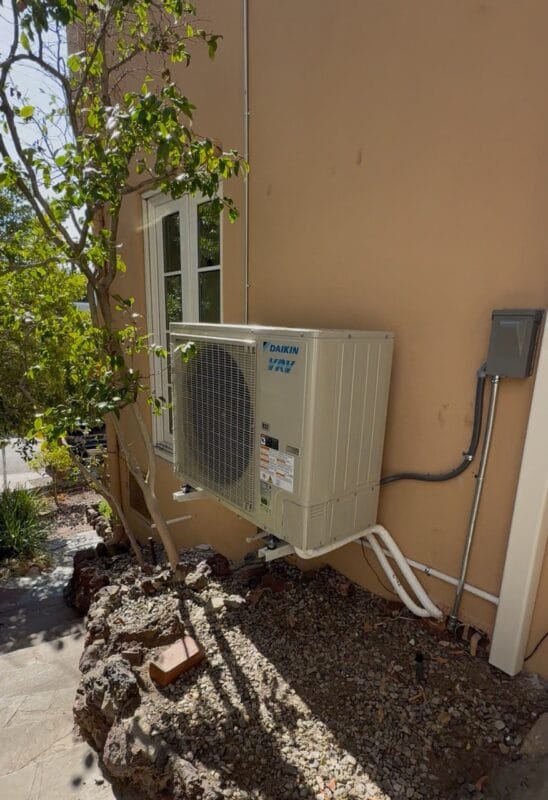
Wondering about ac replacement cost or air condition replacement cost? Here’s why prices can swing from $12k to $52k—and how to compare bids, avoid shortcuts, and pay for what actually matters.
AC Replacement Cost: $12,000 or $52,000 — How Can Both Be Real?
If you’ve been shopping for a replacement, you’ve probably seen it already: two contractors walk into the same house, look at the same “old AC,” and hand you quotes that live on different planets.
One says: “We can do it for $12,000.”
Another says: “This is a $52,000 job.”
Most homeowners react the same way: Someone is trying to rip me off.
Sometimes that’s true. But more often, the gap comes from something simpler:
They’re not quoting the same job.
The phrase ac replacement cost sounds like one thing, but in real homes it can mean anything from “swap the outdoor unit and coil” to “full comfort system rebuild with new ductwork, new electrical, zoning, filtration, permits, and commissioning.”
And that’s why air condition replacement cost can look confusing—even shady—when it’s actually just… complicated.
The “Real” AC Replacement Cost Range (What Most People Actually Pay)
For a straightforward central AC replacement when ductwork and electrical are already adequate, common published ranges for an AC unit replacement often land around $3,900–$8,000 for many homeowners.
But once your project expands beyond “swap the box,” costs can jump quickly—especially if you’re doing a full system replacement (cooling + heating, or switching to a heat pump). Many guides place full HVAC replacement commonly in the $5,000–$12,500 range, with higher totals when ductwork and upgrades are added.
And yes—ductwork alone can be a four-figure to five-figure project depending on access and scope. Trane notes duct installation can range from about $1,500 to well over $20,000.
So how do we get to numbers like $52,000?
That happens when the “AC replacement” quote quietly includes big-ticket items like:
- full duct replacement or redesign
- electrical panel upgrades
- zoning systems + dampers
- premium variable-speed heat pump equipment
- air quality packages (media filters, UV, etc.)
- fresh air ventilation integration
- drywall/attic/platform work
- permits + inspections
- full startup testing and commissioning
In other words: not a swap—a remodel of your home’s comfort infrastructure.
Why Two Quotes Can Be $12k vs $52k
1) Scope: “Equipment Swap” vs “System Design”
A lower quote often assumes:
- existing ducts are fine
- existing electrical is fine
- existing line set is reusable
- no major airflow issues
- minimal permitting effort
- fast install, minimal customization
A higher quote may include:
- duct repairs or full replacement
- new returns/supplies for balanced airflow
- proper load calculation + room-by-room design
- electrical upgrades (disconnect, breaker, panel work)
- new refrigerant line set where required
- permits + inspections
- detailed commissioning steps
If you don’t force apples-to-apples, you’re not comparing prices—you’re comparing assumptions.
2) Ductwork: The Hidden Cost Multiplier
Ductwork is where “ac replacement cost” can explode.
Why? Because ductwork is labor-heavy, sometimes hard to access, and often wrong in older homes (undersized returns, crushed flex, leaky plenums, poor layout).
So if one contractor says “your ducts are fine” and another says “your ducts are the reason you’ve never been comfortable,” you’re not hearing two prices—you’re hearing two diagnoses.
3) Load Calculation: The Competency Test Most Homeowners Don’t Know
Here’s a simple truth: the best equipment won’t fix a bad design.
A serious contractor should be able to explain how they sized the system, usually using an HVAC load calculation (commonly known as Manual J). Manual J is used to determine the heating/cooling load so equipment isn’t oversized or undersized.
What to ask (in normal homeowner language):
- “Did you do a Manual J load calculation, or are you sizing it based on the old unit?”
- “Can you show me the numbers?”
- “Did you do room-by-room sizing, or only a whole-house estimate?”
Why this matters: “rule of thumb” sizing is how people end up with:
- one room freezing, another room roasting
- short cycling (worse comfort, more wear)
- humidity problems
- higher bills than expected
If one quote includes real design work and the other is a “like-for-like swap,” the price difference is not automatically a scam. It’s often a difference in professional process.
4) Equipment Tier: Basic vs Variable-Speed Comfort
A basic single-stage system costs less. Variable-speed, communicating, higher-efficiency systems cost more—and they often require more careful setup.
So when you see a big jump in air condition replacement cost, part of it may simply be: you’re looking at different classes of equipment.
5) Permits, Inspections, and “What Happens If It Fails?”
Permits aren’t exciting—until you sell the home, file an insurance claim, or have a safety issue.
A cheap quote may quietly skip permits. A higher quote may include:
- permit pulling
- code compliance
- inspection coordination
- documentation and warranty registration
That “paperwork” is part of what you’re paying for: reduced risk.
The Best Way to Shop AC Replacement (Without Getting Played)
Step 1: Get 3 In-Home Evaluations (Not Phone Quotes)
Phone quotes are almost always fantasy. Published cost ranges are useful for context, but your home is not a spreadsheet.
If a company charges a small fee for a proper evaluation, it may still save you money by avoiding a wrong system and surprise change orders later.
Step 2: Ask for Photos of Similar Jobs (Portfolio = Reality Check)
You’re not judging aesthetics—you’re judging:
- neat line set routing
- clean electrical work
- sealed duct connections
- proper condensate drainage
- organized attic/crawl work
If their “best work” photos look sloppy, imagine what they do when nobody’s watching.
Step 3: Use These 10 Questions to Compare Bids
Copy/paste this list:
- “Did you size the system with Manual J? Can I see it?”
- “Are you reusing ducts or replacing/redesigning them?”
- “Are you sealing ducts? How?”
- “Will you verify airflow (static pressure / CFM) after install?”
- “Are permits included?”
- “Are you reusing the line set or replacing it?”
- “What exactly is included: thermostat, pads, disconnect, drains, safety switches?”
- “What warranty is included for labor, not just parts?”
- “Will you test and document startup performance?”
- “What will you do if a room is uncomfortable after install?”
A contractor who answers clearly usually has a process. A contractor who gets defensive usually doesn’t.
When Paying More Is Worth It (And When It Isn’t)
Worth paying more for:
- Proper sizing (Manual J) and airflow verification
- Duct fixes when ducts are truly the problem
- Permits + code compliance
- Commissioning and documented performance testing
- A labor warranty you can actually use
Not always worth paying more for:
- “Bigger tonnage” without load calc proof
- expensive add-ons with vague benefits
- brand-name upsells that ignore duct/airflow issues
- “premium” packages with no measurement, no testing, no documentation
Timing Tip: Off-Season Can Save You Money
When it’s 105°F outside, everyone is booked, and you’re desperate, pricing gets less flexible. In shoulder seasons, many companies can offer better availability and sometimes better pricing. (Even many consumer guides recommend scheduling major HVAC work in cooler months when possible.)
Heat Pump Note (Tax Credits & Rebates — Read This Carefully)
If you’re replacing both heating and cooling, you may be looking at a heat pump.
Federal tax credits have been available for qualifying efficiency upgrades. The IRS describes the Energy Efficient Home Improvement Credit (Section 25C) and annual limits; details and eligibility are documented by the IRS and ENERGY STAR.
Important: Some IRS pages list eligibility “through Dec. 31, 2025.” Since it’s now 2026, always confirm current rules for your install date before you assume a credit applies.
Local rebates can also exist (state/utility/city), but they change often—so treat any contractor promising a specific dollar amount as “verify first.”
A Simple Checklist: How to Decide If the Quote Is Fair
Before you choose, make sure every bid you’re comparing clearly states:
- equipment model numbers + efficiency ratings
- what happens with ductwork (reuse/repair/replace)
- electrical scope (any upgrades?)
- permits included or excluded
- startup testing and airflow verification included
- labor warranty terms in writing
- timeline + what protects your home during install (floors, dust, cleanup)
If one company is vague and another is detailed, the detailed quote often looks “more expensive” because it’s actually telling the truth about the scope.
Final Thought
The goal isn’t to find the cheapest ac replacement cost.
And it isn’t to “buy the most expensive” air condition replacement cost either.
The goal is to buy a complete, correctly designed, correctly installed system—one that keeps every room comfortable, doesn’t break early, and doesn’t surprise you with “extra charges” after the job starts.