It’s 98°F outside. You walk inside, expecting relief — and your house feels like a sauna. The AC is running. The thermostat says 75°F. But nothing’s happening. Sound familiar? You’re not alone.
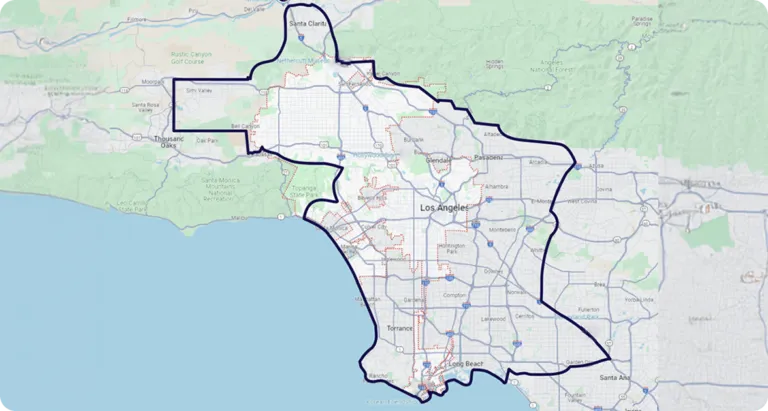
In Pasadena and across the greater Los Angeles area — from Glendale to Altadena — summer temperatures regularly push past 100°F. In fact, NOAA climate data recorded Pasadena hitting 103°F twice in 2025 alone. When your AC gives up during that kind of heat, it’s more than uncomfortable. It can be dangerous.
The good news: most of the time, the reason your AC isn’t cooling has a clear explanation — and often a straightforward fix. Here are the 7 most common culprits, what to look for, and what to do about each one.
Quick note: Some of these fixes are easy DIY. Others require a licensed HVAC technician. We’ll tell you which is which every step of the way.
1. Clogged or Dirty Air Filter
This is the #1 cause of a struggling AC — and it’s also the easiest to fix.
Your air filter is the lungs of your HVAC system. When it’s clogged with dust, pet hair, and debris, air can’t circulate properly. The system works overtime trying to compensate, your energy bill climbs, and the air coming out of your vents feels weak and warm. According to the U.S. Department of Energy, a dirty filter is the single most common cause of reduced AC efficiency.
✅ DIY fix: Check your filter right now. Hold it up to light — if you can’t see light through it, replace it. During peak summer in Pasadena, change filters every 4–6 weeks, not every 3 months as the packaging often says.
2. Low Refrigerant (Freon) Levels
Refrigerant is the chemical that actually makes your AC cold. If your system is leaking refrigerant, it simply can’t cool the air — no matter how long it runs. And a refrigerant leak doesn’t fix itself.
Signs of a refrigerant leak include: ice forming on the outdoor unit or refrigerant lines, a faint hissing or bubbling sound near the unit, and warm air blowing from your vents despite the AC running for hours. The EPA is clear on this: refrigerant can only be handled legally by EPA Section 608-certified technicians. You cannot buy or add it yourself.
Important for Pasadena homeowners: As of January 1, 2026, new EPA rules under 40 CFR Part 84 require stricter leak reporting and repair standards for HVAC systems. Source: EPA.gov
🔧 Call a pro: If you suspect a refrigerant leak, don’t delay. A low-refrigerant system puts enormous strain on the compressor — and compressor replacement can cost $1,500–$2,500 or more.
3. Dirty Condenser Coils
The condenser unit is that big metal box sitting outside your house. Its job is to release heat pulled from inside your home. When the coils get coated in dirt, grass clippings, or — if you’re in Altadena near the foothills — cottonwood fluff and wildfire ash, they can’t release heat efficiently.
Clogged condenser coils are one of the most common causes of an AC running constantly without ever reaching the set temperature. A thorough coil cleaning can restore cooling performance dramatically — sometimes dropping indoor temperatures by 10°F or more within an hour.
✅ DIY-friendly: Turn off the unit at the breaker. Gently spray the fins with a garden hose from the inside out. Do not use a pressure washer — you’ll bend the fins. If they’re heavily caked, schedule a professional coil cleaning ($80–$150 typically).
4. Thermostat Problems
Before blaming your AC, check the brain of the operation: your thermostat.
Common thermostat mistakes that fool homeowners include:
- Fan set to ON instead of AUTO — this blows uncooled air through your vents even when the AC isn’t actually running
- Dead or weak batteries in the thermostat
- The thermostat is in direct sunlight or near a heat source, giving it an inaccurate reading
- Temperature setting that’s too close to the current indoor temp
✅ Quick check: Set the thermostat to at least 5°F below your current indoor temperature and switch the fan to AUTO. Wait 10 minutes. If cold air doesn’t start flowing, the issue is likely elsewhere.
5. Frozen Evaporator Coils
Counterintuitive but true: your AC can literally freeze up on the hottest day of summer.
When airflow is restricted — often because of a dirty filter or blocked vents — the evaporator coil gets too cold and ice forms on it. Once frozen, airflow stops almost completely, and the system can shut itself down to prevent damage. According to the EPA, ice buildup on coils can also indicate a refrigerant issue that requires professional attention if it persists after cleaning the filter.
✅ What to do: Turn your AC OFF immediately (keep the fan on AUTO). Let the coil thaw — this typically takes 2–24 hours. Replace your air filter. Then turn the AC back on and see if cold air returns. If it freezes again, call an HVAC technician.
6. Oversized or Undersized AC Unit
This one surprises most homeowners — bigger isn’t always better when it comes to air conditioning.
An AC unit that’s too large for your home will short-cycle — it cools the space so fast it shuts off before removing humidity, leaving your home feeling cold and clammy, then hot again. A unit that’s too small simply can’t keep up when Pasadena summer heat peaks in the afternoon.
This is especially common in Pasadena’s older craftsman and mid-century homes, where an AC was retrofitted without a proper load calculation. The U.S. Department of Energy recommends that every AC installation include a Manual J load calculation — a detailed analysis of your home’s square footage, insulation, window placement, and local climate.
🔧 Call a pro: If your system is less than 10 years old and still can’t keep up, get a load calculation done. It’s usually $100–$200 and can save you thousands by avoiding premature replacement.
7. Ductwork Leaks or Blockages
Your ducts are the highways that move cool air through your home. If they’re leaking or blocked, that cool air never reaches you.
The U.S. Department of Energy estimates that 20–30% of conditioned air is lost through leaky ducts in the average American home. In Glendale and Pasadena, where many homes were built in the 1950s–1980s, aging ductwork is particularly common.
Signs of duct problems:
- Some rooms are much hotter than others
- Noticeably high electric bills despite moderate use
- Visible tears, gaps, or disconnected sections in accessible ducts (attic, crawlspace)
🔧 Call a pro: Duct sealing and repair typically costs $300–$700 and can improve efficiency by 20% or more — which means real savings on your SoCal Edison bill every month.
Quick Reference: The 7 AC Problems at a Glance
- Dirty filter → Weak airflow, warm air → DIY ($5–$30)
- Low refrigerant → Hissing, ice on unit, warm air → Pro required
- Dirty coils → AC runs constantly, home stays hot → DIY or Pro
- Thermostat issue → AC runs but fan blows room-temp air → DIY first
- Frozen coils → AC stops blowing, visible ice → DIY first, Pro if it returns
- Wrong size unit → Short cycling, humidity issues → Pro (load calculation)
- Leaky ducts → Uneven temps, high bills → Pro ($300–$700)
When Should You Call a Professional in Pasadena?
Here’s a simple rule: if you’ve checked the filter, set the thermostat correctly, and your AC still isn’t cooling after 30 minutes — call a licensed HVAC technician.
In Pasadena and the San Gabriel Valley, most HVAC companies offer same-day emergency service during heat waves. Diagnostic visits typically run $150–$550, and most repairs are completed in a single visit.
One thing to always ask: make sure your technician is EPA Section 608 certified — this is required by law for anyone working with refrigerants. The EPA’s guidance for homeowners recommends asking to see the certification card before work begins.
A Note for Altadena and Glendale Homeowners
If you live in Altadena, the foothill climate means your AC runs harder and longer than systems in flatter parts of LA County. HVAC professionals recommend twice-yearly maintenance — spring and fall — rather than the standard once-a-year tune-up, because Altadena systems experience more wear due to extended heat season.
If you’re in Glendale, pay extra attention to wildfire smoke season. The Pasadena Public Health Department advises running HVAC systems with upgraded MERV 11+ filters during poor air quality days — which also helps your system breathe more efficiently on normal summer days.
Bottom Line
A working AC in Pasadena isn’t a luxury — the Census Bureau reports that 4.9 million U.S. households experienced at least one major AC breakdown lasting 6+ hours last year. In California heat, that’s a health risk, not just an inconvenience.
Start with the simple stuff: change the filter, check the thermostat, look for ice on the unit. If none of that solves it, call a certified local HVAC technician and tell them what you’ve already checked. It’ll save you time — and probably money.
Stay cool out there, Pasadena. Your AC has got this — it just might need a little help.
Sources: NOAA/Extreme Weather Watch (2025) · U.S. EPA (epa.gov) · U.S. Census Bureau (census.gov) · U.S. Department of Energy (energy.gov) · Pasadena Public Health Department